

Hey there! I'm an extrusion plastic tube supplier, and today I wanna chat about how die design can have a huge impact on the shape and size of extrusion plastic tubes. It's a topic that's super important in our industry, and understanding it can really make a difference in getting the right products for your needs.
First off, let's talk about what a die is in the context of extrusion plastic tubes. A die is like a mold that gives the plastic its shape as it's being extruded. It's a crucial part of the whole process, and the design of the die can determine a whole bunch of things about the final tube.
Shape
The shape of the die directly affects the shape of the extrusion plastic tube. For example, if you want a round tube, you'll use a die with a circular opening. This might seem obvious, but there's more to it than just the basic shape. The inner and outer diameters of the die need to be carefully designed to get the right dimensions for the tube.
Let's say you're looking for a Colorful Exterior Sandblasted Or Frosted Acrylic Tube. The die for this type of tube needs to be designed not only to create the round shape but also to account for the sandblasted or frosted finish. The surface texture is an important part of the shape in a way, and the die has to be made in such a way that it allows for the right amount of material flow and pressure to achieve that finish.
If you want a square or rectangular tube, the die will have a completely different design. The corners of the die need to be well-defined to create sharp corners in the tube. The thickness of the walls also plays a role in the die design. A die for a thick-walled square tube will be different from one for a thin-walled one. The material flow in the die needs to be carefully controlled to ensure that the walls are of uniform thickness all around the tube.
Some applications might call for more complex shapes, like oval or triangular tubes. Designing a die for these shapes is even more challenging. The die has to be engineered to make sure that the plastic flows evenly through the non - circular opening. Any unevenness in the flow can lead to a tube with inconsistent wall thickness or a distorted shape.
Size
Size is another crucial factor that's heavily influenced by die design. The size of the die opening determines the outer diameter of the tube. If you want a tube with a larger outer diameter, you'll need a die with a bigger opening. But it's not just about the outer diameter. The inner diameter is also important, especially for tubes that will be used for fluid or gas transfer.
Let's take the example of an Ester PU Coiling Round Extrusion Tube. The die for this tube has to be designed to achieve the right outer and inner diameters. The inner diameter affects the flow rate of the fluid or gas inside the tube, and the outer diameter is important for fitting the tube into other components.
The length of the tube can also be affected by the die design, although in a more indirect way. The die needs to be designed to allow for a continuous extrusion process. If the die is not designed properly, it can cause issues like breaks or unevenness in the tube during the extrusion, which can limit the maximum length of the tube that can be produced.
Wall thickness is a key aspect of the size of the tube. A die for a thin - walled tube will have a different design compared to one for a thick - walled tube. The die has to be made to control the amount of plastic that flows through to create the desired wall thickness. If the wall thickness is not consistent, it can affect the strength and performance of the tube.
Tolerances
Tolerances are really important when it comes to the shape and size of extrusion plastic tubes. Tolerance refers to the allowable deviation from the specified dimensions. Die design plays a huge role in achieving the right tolerances.
For example, if you need a tube with very tight tolerances for a precision application, the die has to be made with extremely high precision. The manufacturing process of the die needs to be carefully controlled to ensure that the dimensions are accurate. Any small error in the die design can lead to a tube that doesn't meet the required tolerances.
On the other hand, if the application doesn't require such tight tolerances, the die design can be a bit more forgiving. This can save on manufacturing costs, but it's still important to make sure that the tube meets the basic requirements for the application.
Customization
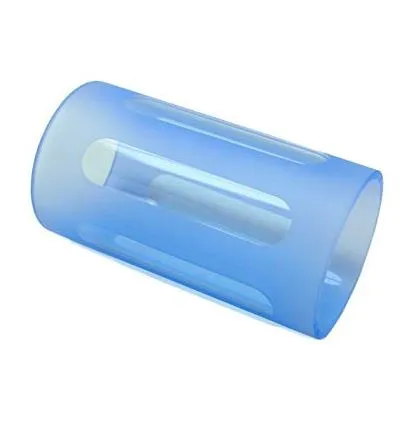
One of the great things about extrusion plastic tubes is the ability to customize them. As a supplier, I often get requests for Customized PC Tubes. Die design is at the heart of customization.
Customers might have specific requirements for the shape, size, and even the surface finish of the tube. Our team of designers works closely with the customers to understand their needs and then design a die that can meet those requirements. Whether it's a unique shape, a specific wall thickness, or a special color, the die has to be tailored to make it happen.

Conclusion
So, as you can see, die design has a huge impact on the shape and size of extrusion plastic tubes. From the basic shape to the most minute details like wall thickness and tolerances, every aspect of the tube is affected by the die.
If you're in the market for extrusion plastic tubes, whether it's a standard product or a customized one, it's important to work with a supplier who understands the importance of die design. We have the expertise and experience to design and manufacture dies that can produce high - quality tubes that meet your exact requirements.
If you're interested in learning more about our extrusion plastic tubes or have a specific project in mind, don't hesitate to reach out. We're always happy to have a chat and discuss how we can help you with your plastic tube needs.
References
- "Plastics Extrusion Technology" by Allan A. Griff
- "Handbook of Plastic Materials and Technology" edited by Irvin I. Rubin