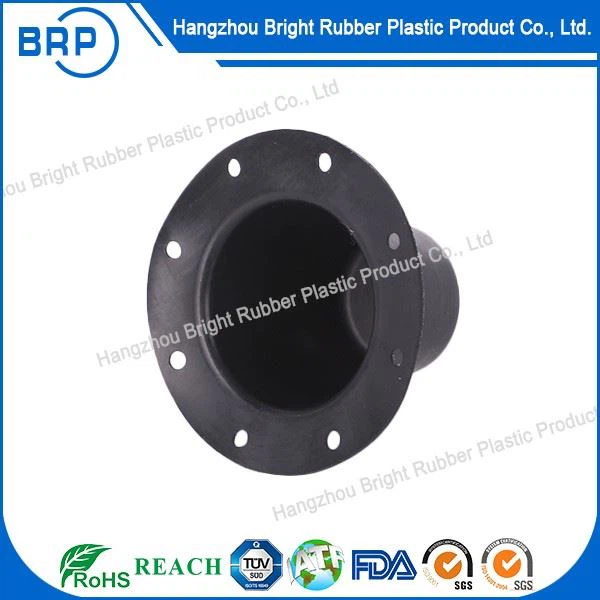
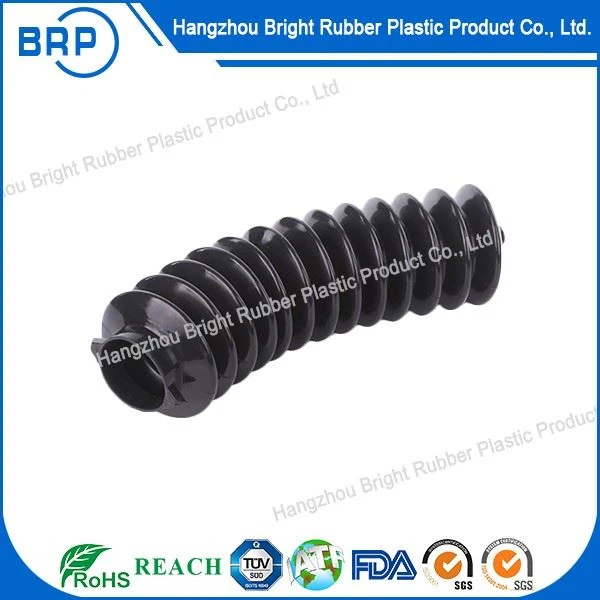
Hangzhou Bright Rubber Plastic Product Co., Ltd. is one of the leading manufacturers and suppliers of sir nbr auto rubber dust cover epdm boots in China. If you're going to buy sir nbr auto rubber dust cover epdm boots made in China, welcome to get more information from our factory. We also accept customized orders.
NBR and EPDM Automotive Rubber Dust Covers & Boots
In automotive engineering, the longevity of mechanical linkages relies heavily on the integrity of their protective components. Rubber dust covers and boots serve as critical barriers for steering joints, CV joints, ball joints, and suspension struts. Their primary function is to retain essential lubricants within the joint while preventing abrasive contaminants-such as road grit, water, and brake dust-from entering. We manufacture these sealing components using two industry-standard elastomers: Nitrile Butadiene Rubber (NBR) and Ethylene Propylene Diene Monomer (EPDM), each selected based on specific operational requirements.
Product Description
Sir NBR auto rubber dust cover EPDM Boots
Material
NR, NBR, SBR, EPDM, FKM, Silicone, HNBR, Viton etc.
Size
According to drawing
Color
Customized,all color
Temperature
Commom: -40~230 Celsius Degrees
Special features /Working environment
Non-toxic; oil-resistance; heat resistance; abrasion-resistance; aging resistance; insulation; acid and alkaline resistancel airtight; shock absorption, etc.
Application
Used in household, fitting, pipes and other industry accessories and auto parts,Motorcycle parts
Certification
SGS, RoHS and FDA,ISO
Delivery time
20-35days after prepayment received
MOQ
1000pcs
Packing details
According to your request
Shipment
By express(DHL/UPS/FEDEX)/By sea/By air
Port
FOB SHANGHAI OR NINGBO
Materials Used in Rubber Bellows:
Depending upon the end use requirements, rubber bellows are manufactured using various synthetic polymers like: • SBR • Neoprene • HNBR • Ethylene Propylene Diene Monomer (EPM, EPDM), etc.
Application Areas of Rubber Bellows:
Rubber Bellows are designed in molded and hand-built variety, and are available in different sizes as well as specifications in order to cater multiple automotive & general industrial applications. Following are some of the industrial segments/ applications Rubber Bellows are used in:
Aerospace: HVAC (Heating, Ventilation and Air Conditioning)
Automotive: Marine
Chemical: Motion Coupling
Electrical Contacts: Petrochemical
Fluid Coupling: Semiconductor
Material selection dictates the service life of an automotive boot. NBR is inherently resistant to petroleum-based fluids, greases, and oils. For applications where the rubber component operates in direct proximity to drivetrain lubricants or engine fluids, NBR provides necessary chemical resistance that prevents swelling and material degradation. Conversely, EPDM exhibits exceptional stability against environmental factors. It resists ozone, ultraviolet radiation, and extreme temperature fluctuations without cracking or hardening. When a vehicle operates primarily outdoors or in regions with significant weather variation, EPDM is typically specified for its long-term weathering characteristics.
Our manufacturing process begins with precise compound formulation. Rather than relying on generic base materials, we adjust polymer blends to achieve targeted physical properties. Durometer hardness, tensile strength, elongation at break, and compression set are all controlled parameters. These values directly influence how the boot behaves during assembly and throughout its service life. A properly formulated compound maintains flexibility across the expected temperature range while providing sufficient structural rigidity to resist tearing under dynamic loads.
Molding techniques vary depending on part geometry and production volume. Compression molding remains suitable for simpler geometries and moderate volumes, offering cost-effective tooling and consistent results. Injection molding is employed when complex internal features, thin walls, or high-volume output justify the additional tooling investment. Both methods require carefully calibrated cure cycles to ensure complete vulcanization throughout the cross-section. Under-cured material lacks optimal physical properties, while over-cured rubber becomes brittle. Our processing protocols maintain this balance through continuous monitoring of mold temperatures and cycle times.
Dimensional accuracy in rubber boots extends beyond simple measurements. The sealing lip geometry, bead diameters, and accordion fold profiles must conform precisely to mating hardware specifications. Even minor deviations can result in improper seating on shafts or housings, leading to premature seal failure. We verify critical dimensions using coordinate measuring equipment and functional gauges that simulate actual installation conditions. This approach catches issues that purely dimensional inspection might miss.
Design considerations also address real-world installation challenges. Assembly-line workers often install boots quickly, sometimes with minimal alignment. Features such as chamfered entry edges, self-guiding lips, and integrated orientation marks reduce installation force and prevent damage during fitting. Some designs incorporate retention rings or locking grooves that secure the boot in position without external clamps, simplifying the assembly process while maintaining positive retention.
Quality verification follows established automotive supplier practices. Incoming raw materials receive lot-specific testing before release to production. Finished parts undergo sampling inspections per agreed-upon acceptance criteria, including visual examination for surface defects, dimensional checks, and periodic destructive testing to confirm material properties remain within specification. Batch traceability links every shipment back to specific material lots, curing records, and operator assignments.
We recognize that dust covers and boots operate within systems rather than in isolation. Compatibility with adjacent metal components matters-thermal expansion differences between rubber and steel can affect sealing pressure over time. Environmental exposure varies dramatically between under-hood locations and exposed suspension components. Our technical team reviews application details during the quotation phase to identify potential concerns before tooling is commissioned.
For customers transitioning from existing suppliers or developing new platforms, prototype samples allow validation before mass production commitment. Initial samples produced from preliminary tooling enable fit checks and preliminary durability assessments. Feedback from this stage frequently informs adjustments to wall thickness, reinforcement placement, or compound selection that improve field performance.
These components represent straightforward solutions to well-understood engineering problems. Their reliability depends less on innovation and more on disciplined execution of established manufacturing principles. Consistent material quality, controlled processing, and thorough verification produce boots that perform predictably across thousands of operating hours. We manufacture NBR and EPDM automotive dust covers with this consistency as our baseline standard, recognizing that component failures in safety-related systems carry consequences far exceeding the cost of the part itself.
FAQ
Q: Are you manufacturer or trading company? A: We are manufacturer, engineer had rich experience over 20 years.
Q: How to get the quickest quotation? A: Sending drawing, material, quantity and other rrequirements by email.
Q: How to get quotation without drawing? A: Possible send sample, pictures or detail descriptions of products to us, we will return you drawing for confirm.
Q: I have an idea for a new product, but not sure if it can be manufactured. Can you help?A. Yes! We are always happy to work with potential customers to evaluate the technical feasibility of your idea or design and we can advise on materials, tooling and likely set-up costs.
Q: My custom products have already been developed on CAD. Can you use the drawings? A. Yes! DWG, DXF, IGES, Solidworks and Rhino files can all be used to generate quotes, models and mould tools - this can save time and money in producing your parts.
Q: Can I test my idea/product before committing to mould tool manufacture? A. Yes, we can use CAD drawings to make models for design and functional evaluations.
Q: What type of plastic/rubber material is best for my design/product? A. Materials selection depends on the application of your design and the environment in which it will function. We will be happy to discuss the alternatives and suggest the best material.
Q: How to get sample? A: Free sample is available for your quality evaluation, but you should pay the freight. Regarding customize products, sample and mould order will go first before mass production.