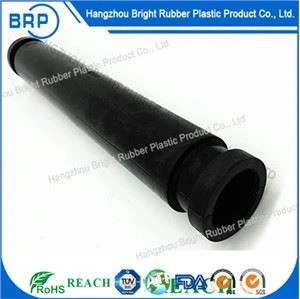
Details:
Model NO.: BRP-RH-0010 Color: Black/White/Blue/Red/Yellow, etc Style/Size/Weight: According to Custom′s Drawing Hardness: 30-90 Shore a Tensile Strength: >=17MPa Elongation at Break: >=300% Creep: 15% Working Temperature: -40~230 Celsius Degree OEM/ODM: Welcomed File: Format Auto CAD, Pdf, JPG...
Hangzhou Bright Rubber Plastic Product Co., Ltd. is one of the leading manufacturers and suppliers of high quality rubber hinges in China. If you're going to buy high quality rubber hinges made in China, welcome to get more information from our factory. We also accept customized orders.
High-Quality Rubber Hinges for Industrial and Commercial Applications
In many industrial, marine, and commercial environments, traditional metal hinges can present significant challenges. They are susceptible to corrosion, generate noise during operation, and often require regular maintenance such as lubrication or tightening. To address these limitations, we manufacture high-quality rubber hinges designed to provide reliable, low-maintenance pivoting solutions. These components serve as durable alternatives in applications where moisture resistance, silent operation, and chemical stability are primary concerns.
Can be FDA, RoHs or REACH approved, and free test slabs and hardness testers can be offered for customer's testing
Package
Inner plastic bag/outside carton/wooden pallets/ or any other special package as per customer's requirements
Notes
Models and logos can be customized as your requirements; Designs and specifications are accepted
Product Show
Our rubber hinges are engineered to withstand repetitive flexing without losing structural integrity. The manufacturing process utilizes specialized elastomer compounds that balance flexibility with tensile strength. Depending on the specific requirements of an application, we select materials based on their environmental compatibility. For instance, EPDM is frequently used for outdoor enclosures due to its superior resistance to UV radiation and weathering. Nitrile rubber is preferred when exposure to oils or fuels is expected, while silicone-based formulations accommodate extreme temperature variations. This material-first approach ensures that each hinge performs consistently within its intended operating parameters.
Production begins with precise mold design tailored to the customer's geometry and load specifications. We employ compression molding techniques optimized for thick-section rubber parts, ensuring uniform density and eliminating internal voids that could lead to premature failure. During curing, temperature and pressure profiles are strictly controlled to achieve optimal cross-linking of the polymer chains. This attention to processing parameters directly influences the hinge's fatigue life and compression set characteristics. Post-cure treatments may be applied when necessary to enhance surface properties or reduce tackiness.
Dimensional consistency is maintained through rigorous tooling maintenance and in-process verification. Critical features such as pin holes, mounting bosses, and flex zones are inspected at regular intervals using calibrated measurement equipment. We recognize that even minor deviations in hole alignment can cause binding or uneven stress distribution during installation. Therefore, our quality control protocols include functional checks where sample hinges are mounted and cycled to verify smooth operation before shipment.
Customization capabilities extend beyond standard catalog designs. We work with customers to develop hinges that integrate directly into existing assemblies, eliminating the need for additional hardware or adapters. Features such as integrated stops, self-aligning surfaces, or reinforced pivot areas can be incorporated into the mold design. Color coding is also available for visual identification in complex systems where multiple hinge types are present.
The performance characteristics of rubber hinges differ fundamentally from mechanical alternatives. They do not require lubrication, which makes them particularly suitable for cleanroom environments, food processing equipment, or marine applications where grease contamination must be avoided. The inherent damping properties of elastomers absorb vibration and shock loads, protecting both the hinge itself and surrounding structures. Silent operation is another consistent benefit, valuable in settings where noise reduction contributes to operator comfort or regulatory compliance.
We approach each project with an understanding that hinge selection involves trade-offs. Rubber hinges excel in corrosive environments and low-to-medium load applications but have defined limits regarding shear forces and torque capacity. Our engineering team provides technical guidance during the specification phase to ensure that selected designs operate well within safe working parameters. When applications exceed the capabilities of elastomeric solutions, we communicate this transparently rather than forcing an inappropriate product fit.
Quality documentation accompanies all shipments, including material certifications, dimensional inspection reports, and batch traceability records. This information supports customer compliance efforts and facilitates root cause analysis should field issues arise. We maintain retention samples from each production lot for extended periods, enabling retrospective testing if questions emerge after delivery.
For new applications, prototype development allows validation before committing to production tooling. Sample hinges can be produced using soft tooling or rapid prototyping methods to assess form, fit, and preliminary function. This iterative approach reduces the risk of costly modifications later in the development cycle. Feedback from prototype testing often leads to refinements in durometer selection, wall thickness, or reinforcement placement that improve long-term reliability.
Our production facility operates with standardized processes documented in controlled work instructions. Operator training emphasizes consistency in material handling, mold preparation, and demolding techniques-all factors that influence final part quality. Continuous monitoring of cure cycles and environmental conditions within the molding area helps maintain stable output across production runs.
High-quality rubber hinges represent a practical solution for specific engineering challenges rather than a universal replacement for mechanical hinges. Their value lies in eliminating maintenance burdens, resisting environmental degradation, and providing predictable performance over extended service intervals. We manufacture these components with the same attention to detail applied to any precision industrial product, recognizing that component reliability ultimately reflects on our customers' end products.