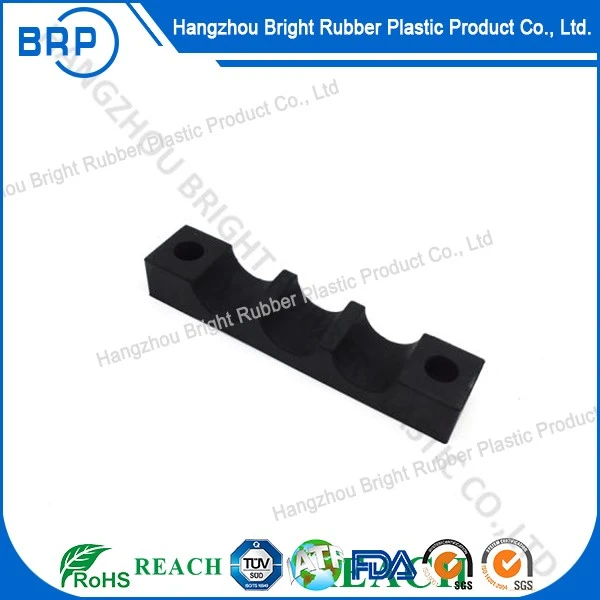
Hangzhou Bright Rubber Plastic Product Co., Ltd. is one of the leading manufacturers and suppliers of high quality custom injection plastic parts t shape/square shape in China. If you're going to buy high quality custom injection plastic parts t shape/square shape made in China, welcome to get more information from our factory. We also accept customized orders.
Custom Injection Molded T-Shape and Square Plastic Parts
Custom injection molding is a highly specialized manufacturing process, particularly when producing parts with distinct geometric profiles such as T-shapes or square configurations. Unlike standard cylindrical components, these shapes introduce specific engineering challenges related to mold flow, material shrinkage, and part ejection. From our perspective as a manufacturer, producing high-quality T-shaped and square plastic parts requires a systematic approach that balances tooling design, material science, and precise process control. We view these components not just as plastic forms, but as functional elements where dimensional stability and structural integrity are paramount.
Product Description
Description
Material
As you required
Size
According to drawing
Color
Customized
Temperature
According to drawing
Application
Used in household, fitting, pipes and other industry accessories and auto parts.
Certification
SGS, RoHS and FDA.
Delivery time
20-35days after prepayment received
MOQ
100-1000pcs
Packing details
According to your request
Shipment
By express(DHL/UPS/FEDEX)/By sea/By air
Port
FOB SHANGHAI OR NINGBO
Our Factory
Geometric Challenges in Tooling Design
The fundamental difference between a simple flat plate and a T-shaped or square profile lies in how the molten plastic fills the mold cavity. T-shaped parts typically feature varying wall thicknesses where the vertical stem meets the horizontal crossbar. In injection molding, uneven wall thickness can lead to differential cooling rates. Thicker sections cool and shrink slower than thinner sections, which can cause internal voids, surface sink marks, or warping. To mitigate this, we utilize mold flow analysis software during the tooling design phase. This allows us to simulate the filling pattern and optimize gate locations to ensure uniform packing pressure throughout the geometry.
For square-shaped parts, the primary concern is often maintaining perpendicularity and flatness. Plastics naturally shrink as they transition from a molten state to a solid, and this shrinkage is rarely perfectly isotropic (uniform in all directions). Crystalline materials like polypropylene or nylon tend to shrink more significantly than amorphous materials like ABS or polycarbonate. When designing molds for square profiles, we apply specific shrinkage compensation factors based on the selected resin and the orientation of the part within the mold. Additionally, square parts require careful consideration of draft angles. Even a fraction of a degree of draft per side is necessary to prevent the part from sticking in the cavity during ejection, which could otherwise result in cosmetic damage or dimensional distortion.
Material Selection and Processing Parameters
The choice of polymer directly influences the manufacturability of T-shapes and square profiles. For applications requiring high rigidity and sharp corner definition, amorphous resins are frequently specified due to their lower overall shrinkage rates. However, if the application demands chemical resistance or flexibility, semi-crystalline materials may be required despite their higher shrinkage potential. When processing crystalline materials for complex geometries, we adjust holding pressure and cooling times to manage volumetric shrinkage effectively.
Mold temperature control is another critical variable. Uniform mold temperature across both the core and cavity sides helps minimize residual stresses within the part. In T-shaped components, trapped stress at the inner corners can lead to premature failure under load. By utilizing conformal cooling channels where feasible, or optimizing baffle and bubbler cooling systems, we aim to achieve consistent thermal management. This reduces cycle time variations and ensures that every shot produces a part with predictable physical properties.
Dimensional Control and Quality Verification
Quality in custom injection molding is established through statistical process control rather than reliance on final sorting. For T-shaped and square parts, critical dimensions often include the width of the crossbar, the height of the stem, and the 90-degree angle accuracy. We employ coordinate measuring machines (CMM) and optical comparators to validate first-article samples against CAD data. During production runs, regular sampling verifies that the process remains stable and within specified tolerances.
Wall thickness verification is equally important, especially in T-junctions where material accumulation occurs. Ultrasonic testing or cross-sectioning may be utilized to confirm that no internal porosity exists in thick sections. Surface finish requirements also dictate mold polishing standards; any texture applied must account for the fact that textured surfaces can appear slightly larger due to the mold etching process, requiring slight dimensional adjustments in the steel.
Application-Specific Considerations
T-shaped and square plastic parts serve diverse functions ranging from structural brackets and connector housings to fluid manifold components and decorative trim. Each application imposes different performance criteria. Structural brackets may require glass-filled reinforcements to increase modulus, which in turn affects mold wear and requires hardened steel tooling. Connector housings demand tight positional tolerances for metal insert placement, necessitating precision machining of mold inserts and potentially secondary assembly operations.
We recognize that successful production depends on clear communication regarding end-use conditions. Environmental exposure, load-bearing requirements, and regulatory compliance all inform our recommendations for material grades and processing parameters. Rather than offering generic solutions, we evaluate each project's specific constraints to determine the most appropriate manufacturing strategy.
Manufacturing Capability and Consistency
Producing custom geometric profiles consistently requires experienced personnel and well-maintained equipment. Our facility operates modern injection molding presses with closed-loop process control, allowing real-time adjustments to maintain parameter consistency. Preventive maintenance schedules for molds ensure that parting lines remain sealed and ejector systems function smoothly, preventing flash or ejection damage that could compromise part quality.
Documentation and traceability are maintained throughout the production lifecycle. Material lot records, process parameter logs, and inspection data provide transparency into how each batch was manufactured. For customers operating in regulated industries, we support validation protocols and provide comprehensive documentation packages upon request.
Our focus remains on delivering functional, dimensionally accurate plastic components through disciplined manufacturing practices. The complexity of T-shaped and square geometries demands respect for the physics of injection molding, and we apply this understanding systematically to every project we undertake.